Primary Source
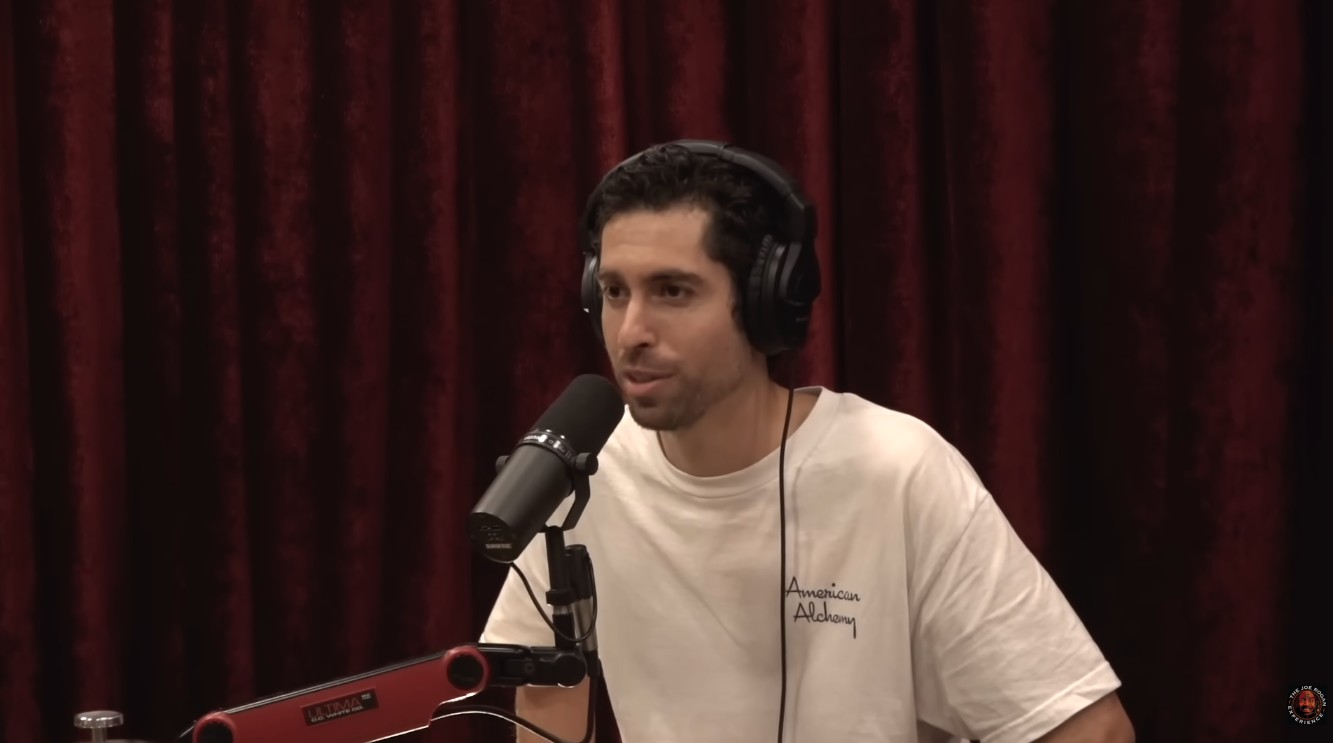
Joe Rogan Experience #2331 – Jesse Michels
Guest: Jesse Michels · Host: Joe Rogan · YouTube @PowerfulJREIntroduction
Introduction: A Search Through the Fog
The modern UFO debate is no longer confined to distant lights and anonymous witnesses. It now includes military videos, congressional hearings, intelligence officials, classified research, disputed materials, alleged crash-retrieval programs, and a growing public argument over how much the government actually knows. Yet greater attention has not produced equal clarity. The closer the subject moves toward official recognition, the more difficult it can become to separate evidence from inference, history from mythology, and disclosure from strategic messaging.
That problem sits at the center of The Joe Rogan Experience episode #2331 with Jesse Michels, creator and host of American Alchemy. Michels approaches controversial science and culture by tracing networks of inventors, physicists, intelligence figures, military programs, and unconventional researchers. In this conversation, he and Joe Rogan move through artificial intelligence, remote viewing, lunar mysteries, Bob Lazar, Thomas Townsend Brown, classified aerospace development, UAP reports near nuclear facilities, consciousness, and the disputed bodies recovered in Peru.
The episode is not a presentation of settled conclusions. It is an exploration of connections— some documented, some circumstantial, and some openly speculative. Michels repeatedly says that he does not know which parts of the UFO narrative are true. His central concern is that secrecy and disinformation may produce stories containing both authentic information and deliberate falsehoods. Rogan, fascinated by the subject but increasingly frustrated by unsupported promises, summarizes his own position more bluntly: he is not hostile to UFOs; he is hostile to claims that smell like deception.
The result is a useful case study in how to examine extraordinary ideas without pretending that every unanswered question is evidence of an extraordinary answer.
Investigation Note
Who Is Jesse Michels?
Jesse Michels is the host of American Alchemy, a long-form interview and documentary series focused on frontier science, technology, history, and unconventional ideas. He tells Rogan that his path into the subject began while working at Peter Thiel’s family office, where his role included venture investing and bringing unusual thinkers into conversation.
That environment exposed him to people working across technology, religion, politics, economics, consciousness, and secretive research. Rather than treating UFOs as an isolated mystery, Michels came to see the subject as a convergence point. Questions about unidentified craft lead toward aerospace history. Aerospace secrecy leads toward intelligence operations. Intelligence history leads toward psychological warfare and remote viewing. Claims of exotic propulsion lead toward neglected inventors, classified budgets, and the boundary between accepted and speculative physics.
This network-based method is Michels’s strength. It can reveal genuine relationships that a narrower investigation might overlook. It also carries a risk: the existence of a connection between people or institutions does not prove that every associated claim is true. A contractor’s involvement in classified work, for example, does not establish possession of extraterrestrial technology. Historical proximity can justify further investigation without completing the argument.
Investigation Note
The Problem of Disclosure: Truth, Noise, and Limited Hangouts
Michels argues that the UFO subject should be approached through the possibility of “limited hangouts”—controlled disclosures in which some true information is released alongside misleading or incomplete material. In intelligence practice, ambiguity can serve multiple purposes. It can conceal a real capability, protect a source, confuse an adversary, test public reaction, recruit talent, or discredit an entire subject by surrounding it with absurdity.
This framework helps explain why UFO stories often resist simple classification. A witness may be sincere while repeating false information received from someone else. A document may contain authentic names and dates but promote an invented conclusion. A person may reveal something real while exaggerating other details. A classified aircraft may account for part of a sighting without explaining every reported performance characteristic. The difficulty is that the limited-hangout concept can become unfalsifiable. If evidence supports a claim, it is treated as confirmation; if evidence contradicts it, the contradiction can be labeled disinformation. Used carelessly, the framework protects a theory from every possible test.
A disciplined investigation therefore needs independent anchors:
- documents whose origin and chain of custody can be verified;
- sensor data with known calibration and surrounding context;
- testimony from witnesses positioned to know the specific fact in question;
- physical samples available to qualified independent laboratories;
- predictions made before the result rather than explanations added afterward; and
- replication by researchers who do not share the original conclusion.
Without those anchors, “disinformation” may explain why a story is confusing, but it cannot tell the public which parts are true.
Investigation Note
Bob Lazar: A Story That Remains Both Powerful and Contested
Bob Lazar’s claim that he worked near Area 51 attempting to understand a recovered craft remains one of the most influential stories in modern UFO culture. Michels tells Rogan that he has become more open to the possibility that Lazar was present at a sensitive facility and encountered something unusual. He also insists that the story cannot simply be accepted at face value.
The episode focuses heavily on Lazar’s association with pilot and UFO enthusiast John Lear. Michels considers whether Lear was merely credulous, a source of uncontrolled rumor, or a deliberate channel through which selected information could travel. The fact that Lear was already immersed in sensational UFO claims complicates any attempt to use his involvement as independent corroboration.
Lazar’s reference to element 115 is similarly dramatic but frequently overstated. Chemical elements are defined by their number of protons, so scientists could anticipate that an element with 115 protons should exist before it was synthesized and officially named moscovium. The extraordinary part of Lazar’s claim is not that element 115 would exist. It is that a stable isotope could allegedly power or enable the operation of a craft. No publicly available sample has established that claim.
Michels treats Lazar as potentially sincere while leaving open several explanations:
- Lazar witnessed a genuinely anomalous craft or material;
- he encountered an advanced but human aerospace project;
- he received a mixture of real technical exposure and false briefing material;
- details changed or expanded through memory, interpretation, and retelling; or
- central parts of the account are inaccurate.
The enduring appeal of the story comes from its specificity. The enduring problem is that the most consequential claims remain inaccessible to independent examination.
Investigation Note
Thomas Townsend Brown and the Search for Antigravity
The episode’s deepest historical investigation concerns Thomas Townsend Brown, an inventor associated with high-voltage experiments and the Biefeld-Brown effect. Brown observed that asymmetrical capacitors exposed to high voltage could produce thrust. He interpreted the phenomenon as a possible relationship between electromagnetism and gravity and spent decades pursuing propulsion applications.
Michels emphasizes Brown’s proximity to respected scientists, military personnel, aerospace figures, and government-supported research. He cites archival reports, witness accounts, experimental demonstrations, and Brown’s work in vacuum environments. To Michels, these connections suggest that official interest in unconventional propulsion was more serious and sustained than the public history usually admits.
The technical distinction is crucial. High-voltage asymmetrical capacitors can generate electrohydrodynamic thrust—often called ionic wind—by moving charged particles through air. That effect is real, but it is not antigravity and does not operate as a reactionless drive. A stronger claim would require a repeatable force in a sufficiently hard vacuum, with thermal, electromagnetic, mechanical, and measurement artifacts excluded.
Michels acknowledges this divide. He describes a more conventional demonstration that Brown allegedly used as a “wounded prairie chicken”—a visible but incomplete version that could distract observers from more sensitive work. That interpretation is intriguing, but it also illustrates the evidence problem. If public failures are explained as deliberate camouflage and successful classified tests remain unavailable, outside investigators cannot determine whether a breakthrough occurred.
Brown’s history establishes several things with confidence: unconventional propulsion attracted serious interest; high-voltage devices can create measurable forces; and military and aerospace institutions explored concepts beyond ordinary aircraft design. It does not publicly establish that Brown controlled gravity or produced a practical antigravity vehicle.
Investigation Note
Black Projects and the Technology- Protection Hypothesis
Rogan asks whether craft described as UFOs could represent secret human technology rather than vehicles from another civilization. Michels considers that possibility through the history of stealth development, Lockheed’s Skunk Works, rumored aircraft such as Aurora, and the long delay between classified innovation and public acknowledgment. This is one of the strongest ordinary explanations for at least some sightings. Advanced aircraft are tested in restricted areas. Their shapes, operating altitudes, materials, and flight profiles may be unfamiliar to witnesses. Governments have clear reasons to deny or misdirect attention from strategic capabilities.
But classified technology cannot be used as a universal answer. A credible human-technology explanation must still fit the reported date, location, performance, and known development path. A triangular silhouette or unusual sonic signature may plausibly belong to a black project. Instant acceleration, extreme maneuvering without visible propulsion, or transmedium operation would require much more substantial evidence before either a human or non-human origin could be assigned.
Michels’s broader hypothesis is that UFO mythology may sometimes protect real technology. A person who reports an impossible craft can be dismissed as a believer, while the underlying aerospace program remains concealed. Conversely, exaggerated technological rumors could be planted to convince adversaries that the United States possesses capabilities it does not have.
Both strategies are historically plausible. Neither tells us which individual report belongs in which category.
Investigation Note
Roswell, Materials, and the Temptation of Back-Engineering
The conversation links antigravity research with alleged debris from the 1947 Roswell incident and later work on unusual alloys. Michels discusses shape-memory metals, nickel-titanium research, magnesium-bismuth samples, and stories that recovered material reached Wright Field or private laboratories.
Here, provenance matters more than appearance. A sample can exhibit unusual layering or composition without being extraterrestrial. To connect it to a crash, investigators would need a documented chain from recovery site to laboratory, protection from contamination or substitution, reliable dating and composition analysis, and independent access to the material.
The episode includes claims that researchers have examined magnesium-bismuth structures associated with UFO cases and that similar materials appear in Brown’s technical work. That resemblance may be worth studying, but it does not establish common origin. Materials used in high-voltage experiments can also appear in ordinary industrial and scientific contexts.
The back-engineering hypothesis becomes attractive because it appears to connect several mysteries at once: rapid postwar aerospace development, secrecy, strange materials, unusual craft, and the concentration of research around military institutions. A theory that explains many facts can be powerful—but it can also become a narrative net that catches unrelated events.
The evidentiary threshold should therefore remain high. A verified historic contract demonstrates that research occurred. A witness statement demonstrates that a claim was made. Neither alone proves that the research began with recovered non-human technology.
Investigation Note
UAP and Nuclear Facilities: A Pattern Worth Testing
Michels considers the reported relationship between UAP and nuclear weapons to be one of the strongest parts of the subject. He refers to testimony from military personnel, radar operators, security staff, and others who say unusual objects appeared near nuclear installations or interfered with weapons systems.
The pattern is strategically meaningful even without an extraterrestrial conclusion. Restricted nuclear sites attract surveillance. Adversarial platforms, sensor anomalies, balloons, drones, classified domestic systems, atmospheric effects, and human misidentification all require investigation. Any unknown object near nuclear infrastructure is a security issue.
The more extraordinary interpretation is that a non-human intelligence monitors humanity’s ability to destroy itself—or shares the planet and is protecting its own environment. Rogan and Michels explore both ideas. They also consider whether nuclear activity functions as a signal that attracts an external intelligence.
At present, the public evidence does not establish that a single non-human actor is responsible for the reported incidents. A pattern must be tested against the total number of nuclear sites, observation hours, reporting practices, military sensor density, and comparable reports from non-nuclear locations. Otherwise, selection bias may make a cluster look more exclusive than it is.
Still, the reports should not be dismissed. The appropriate response is better data: synchronized radar, infrared, optical, electromagnetic, and environmental records; exact timelines; preserved sensor metadata; and independent analysis. The nuclear connection is a serious research question, not proof of a particular answer.
Investigation Note
Remote Viewing, the Moon, and the Difference Between History and Validation
The episode also examines remote viewing and stories of structures on Mars or the far side of the Moon. The United States government did fund programs investigating whether people could describe distant or hidden targets through anomalous perception. That history is documented.
The existence of a government program, however, is not confirmation of the phenomenon it studied. Official evaluations concluded that remote-viewing information was too inconsistent and subjective to provide dependable operational intelligence. Individual sessions may appear impressive, but the program’s existence should not be cited as proof that specific visions of ancient Martians or lunar bases were accurate.
The Moon provides another example of a real observation acquiring a speculative interpretation. Apollo impacts produced prolonged seismic vibrations, popularly described as the Moon “ringing like a bell.” NASA explains the persistence through the Moon’s cold, dry, rigid geology, which attenuates seismic waves differently from Earth. The event is documented; the conclusion that the Moon is hollow or engineered does not follow from it.
Michels and Rogan are aware of the distinction. They treat alleged lunar bases and remote-viewing accounts as low-probability possibilities rather than confirmed discoveries. Even so, the discussion shows how easily a true scientific detail can become rhetorical support for an unrelated theory.
Investigation Note
Consciousness and the Limits of Human Perception
Michels recounts his own sightings, including a metallic object moving low over Laurel Canyon and high-altitude orb-like objects observed while practicing intensive breathwork with a friend. He does not claim to know what they were. In fact, he says he is more inclined to discount his own experience than testimony from trained personnel with relevant clearances.
That caution is important. Personal testimony can be sincere and valuable, particularly when multiple people observe the same event. Yet memory, distance, lighting, expectation, and incomplete viewing conditions can make identification difficult.
The conversation then asks whether altered or heightened states of consciousness might allow people to perceive aspects of reality normally filtered out. Human senses unquestionably capture only limited ranges of light, sound, and other physical information. The speculative leap is that psychedelics, breathwork, meditation, or other states reveal external entities rather than internally generated experiences.
Three possibilities remain distinct:
- a person misperceives or hallucinates an event;
- a real external event occurs while the person is in an altered state; or
- the altered state provides access to information ordinarily unavailable.
The first two are well within established experience. The third is a hypothesis requiring controlled evidence. It cannot be ruled in merely because ordinary perception is limited.
Investigation Note
The Peruvian Bodies: Extraordinary Specimens With a Provenance Problem
Near the end of the episode, Rogan and Michels discuss small tridactyl bodies associated with Peru. Michels has viewed some specimens in person and describes CT imagery, apparent bones, tissues, organs, implants, and a purported fetus. He says the larger “M-type” bodies appear more anatomically coherent than smaller specimens publicly displayed in Mexico. He is also direct about the case’s weaknesses. The bodies reportedly emerged through a grave robber using an alias, leaving the original location and chain of custody uncertain. Some related objects have been identified as constructed pieces. Genetic samples have produced contamination, weak signal-to-noise ratios, and conflicting interpretations. Different specimens may not share the same origin.
This means several possibilities remain open:
- some bodies are altered human or animal remains;
- some are modern constructions made for sale or publicity;
- the collection mixes authentic archaeological remains with fabricated specimens;
- an unfamiliar human or animal population is represented; or
- the most extraordinary interpretation is correct.
Visual strangeness cannot decide among those options. Neither can the prestige of an expert who was allowed only limited access. A decisive study would require lawful custody, secure sampling, multiple independent laboratories, blinded imaging review, complete raw data, ancient-DNA protocols, contamination controls, and publication in a forum where methods can be challenged.
Michels’s most defensible position is that the specimens deserve rigorous examination because either result would matter. A sophisticated hoax would reveal an important archaeological crime and fabrication method. An unknown biological population would be a major anthropological discovery. A non-human origin would be historic. The size of the possible discovery is precisely why the standards must be exceptionally strong.
Investigation Note
Artificial Intelligence and the Next Epistemic Crisis
Although the episode centers on UAP, it opens with artificial intelligence and synthetic media. Rogan and Michels discuss persuasive AI, human attachment to chatbots, deceptive behavior in experimental systems, and the rapid improvement of generated video.
This subject belongs in the UFO conversation because the evidentiary environment is changing. Images, voices, documents, and apparent witnesses can now be manufactured cheaply and convincingly. Future cases will require original files, metadata, multiple sensor types, known custody, and corroboration from sources not derived from the same digital artifact.
AI also creates a deeper parallel. Both AI and UAP debates concern intelligence that may not fit familiar human categories. In each field, people project intention onto ambiguous behavior. A chatbot’s fluent language can feel conscious; a moving light can feel purposeful. Those impressions may be meaningful, but they are not sufficient by themselves.
The question is no longer simply whether a video looks real. It is whether the entire evidentiary chain survives adversarial examination.
Investigation Note
What the Evidence Supports—and What It Does Not
The conversation contains facts, testimony, interpretations, and speculation that should not be blended together.
- Confirmed facts: The U.S. government has investigated UAP and remote viewing; classified aerospace programs have remained secret for years; Thomas Townsend Brown conducted high-voltage propulsion experiments; Apollo impacts produced prolonged lunar seismic signals; element 115 was synthesized and named moscovium; and disputed tridactyl specimens have undergone imaging and limited testing.
- Documented testimony and observations: Military personnel have reported UAP near sensitive facilities; Lazar has described work involving an alleged recovered craft; Michels reports personal sightings; and researchers have offered conflicting assessments of the Peruvian bodies.
- Reasonable investigative hypotheses: Some UAP may be classified aircraft, foreign surveillance systems, sensor artifacts, natural phenomena, or misidentifications. Secrecy and disinformation may have distorted public understanding.
- Unverified interpretations: The government possesses non-human craft; Brown achieved antigravity; Roswell debris seeded new technologies; UAP monitor nuclear weapons; altered consciousness reveals normally hidden entities; or the Peruvian bodies represent non-human beings.
- Open questions: Which unresolved cases have sufficient multisensor data? Can alleged materials be independently tested with a secure chain of custody? Did any high-voltage propulsion experiment produce anomalous force in a rigorous vacuum? Can witness networks be separated from shared sources and folklore? What information remains classified, and why?
NASA’s scientific position provides a useful baseline: some observations remain unresolved because the necessary data are missing, but unresolved does not mean extraterrestrial. The absence of a conventional explanation is the beginning of an investigation, not its conclusion.
Investigation Note
Conclusion: Bold Questions Need Stronger Evidence
Jesse Michels brings unusual energy to the UFO subject because he is willing to cross disciplinary boundaries. He looks for connections between forgotten inventors, classified aerospace history, intelligence tradecraft, consciousness research, archaeology, and modern disclosure. That breadth can surface leads that institutional research ignores.
The same breadth demands restraint. A documented relationship is not a demonstrated technology. A government program is not proof that its target phenomenon was real. A striking image is not a verified specimen. An unresolved military report is not an identified non-human vehicle.
Rogan and Michels ultimately agree on the most productive position: ridicule is not an investigative method, but neither is belief. Institutions can become defensive, political, and overly protective of accepted models. Outsiders can become attached to patterns, personalities, and stories that outpace the evidence. Progress requires freedom to ask embarrassing questions and discipline strong enough to reject exciting answers when they fail.
The UAP mystery may eventually resolve into several different phenomena rather than one grand explanation—classified aircraft, foreign systems, natural events, perceptual errors, deliberate misinformation, and perhaps a remainder that challenges existing knowledge. The task is not to force every anomaly into a preferred worldview. It is to build an evidence trail strong enough that the conclusion no longer depends on who wants to believe it.
Investigation Note
Key Takeaways
- Jesse Michels approaches UAP as a network connecting aerospace history, intelligence, unconventional physics, consciousness, and archaeology.
- His “limited hangout” framework explains why true and false information may coexist, but it cannot substitute for independent verification.
- Bob Lazar’s account remains influential and contested; the existence of element 115 was predictable and does not validate the alleged propulsion system.
- Thomas Townsend Brown conducted genuine high-voltage propulsion research, while public evidence for practical antigravity remains unconfirmed.
- Classified aerospace programs plausibly explain some UFO reports, but each case must fit the technology, date, location, and observed performance.
- Claims about recovered materials require a secure chain of custody and independent laboratory access before back-engineering can be established.
- Reports of UAP near nuclear facilities deserve serious security and scientific investigation without assuming a non-human cause.
- Government funding of remote viewing confirms official interest, not reliable psychic intelligence or specific visions of Mars and the Moon.
- Apollo’s “ringing Moon” is a real seismic observation with conventional geological explanations; it is not evidence that the Moon is hollow.
- Michels presents his personal sightings as unresolved experiences rather than proof.
- The Peruvian bodies remain disputed because of poor provenance, possible specimen mixing, contamination, and inconsistent testing.
- AI-generated media will make metadata, chain of custody, multisensor corroboration, and raw-data access essential to future UAP research.
Investigation Note
Questions for Further Exploration
- Which UAP cases contain calibrated multisensor data that independent scientists can examine?
- Can researchers develop a transparent method for detecting deliberate disinformation without making the theory unfalsifiable?
- Did any of Thomas Townsend Brown’s vacuum experiments produce thrust beyond known electrostatic, thermal, or mechanical effects?
- What records could establish whether Lazar worked at the specific facility and in the role he described?
- Can alleged crash materials be traced continuously from recovery to present custody?
- Do reports near nuclear facilities occur at a higher rate than reports near comparable non-nuclear military sites?
- What portion of historic UFO sightings can now be matched to acknowledged black aerospace programs?
- Can altered-state sightings be studied prospectively with synchronized cameras, sensors, and blinded controls?
- Will lawful, independent sampling resolve the origin of the Peruvian specimens?
- How should journalists authenticate extraordinary photographs, recordings, and documents in the age of generative AI?
- What evidence would distinguish advanced human technology from a genuinely non-human intelligence?
- Which classified information can be released without compromising legitimate national-security capabilities?