Primary Source
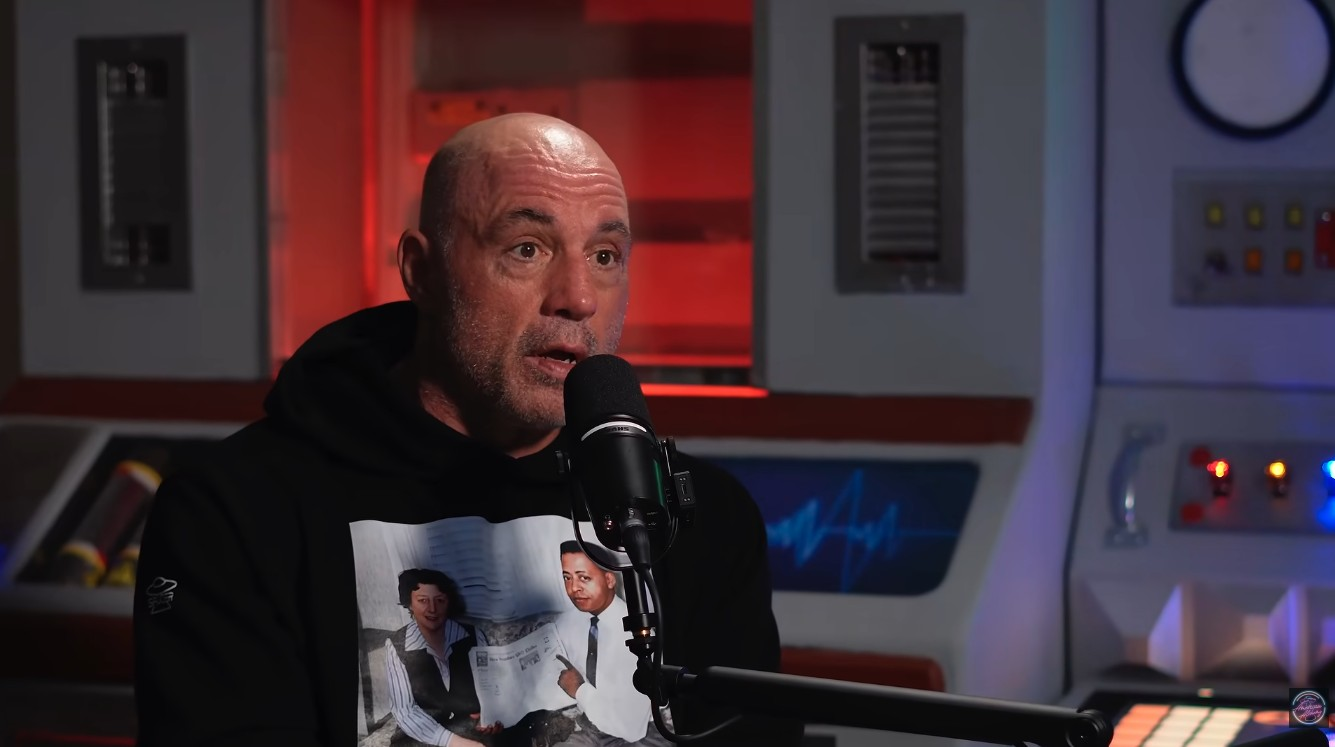
Joe Rogan: The Truth About Aliens (He Finally Says It)
Guest: Joe Rogan · Host: Jesse Michels · YouTube @JesseMichelsIntroduction
Introduction: When the Interviewer Becomes the Interviewed
Joe Rogan has spent thousands of hours asking other people questions. Scientists, comedians, fighters, intelligence veterans, politicians, entrepreneurs, and witnesses to extraordinary events have all passed through his studio. Yet Rogan himself is rarely placed in the guest's chair for a sustained conversation about the ideas that have shaped his curiosity.
That reversal is what makes his interview with Jesse Michels so compelling. Michels does not approach Rogan as a celebrity profile or ask for a conventional career retrospective. Instead, he treats Rogan's public body of work as an intellectual trail. The conversation begins with a vivid dream involving apparently nonhuman beings, then expands into UFO disclosure, government secrecy, ancient civilizations, psychedelics, artificial intelligence, religion, consciousness, and the limits of institutional trust.
The resulting episode is not a presentation of settled conclusions. It is a record of two intensely curious people thinking aloud at the boundary between evidence and imagination. Rogan repeatedly entertains radical possibilities, but he also returns to uncertainty. The dream that opens and closes the interview, he emphasizes, was most likely a dream. That tension - between wonder and restraint - is the key to understanding the discussion.
Investigation Note
A Rare Look at Rogan's Intellectual Method
Rogan's influence does not come from claiming to be a specialist in every subject he discusses. It comes from his willingness to remain with a question long enough for competing possibilities to surface. In this interview, Michels turns that method back on him.
Rogan describes himself as someone who can entertain an idea without automatically accepting it. He connects this attitude to the late-night radio tradition of Coast to Coast AM and Art Bell, where unconventional claims could be explored without requiring the host to certify every story as fact. For Rogan, open inquiry is a form of intellectual entertainment, but it is also a response to history. Institutions have sometimes been wrong, deceptive, politically constrained, or slow to accept disruptive evidence. That record makes automatic dismissal feel as intellectually careless as automatic belief.
The episode therefore operates on several levels at once:
- Documented reality: Rogan is a highly influential broadcaster with a long history of discussing UFOs, altered states, emerging technology, and contested history.
- Personal testimony: He recounts a dream and psychedelic experiences as events that felt subjectively powerful.
- Attributed claims: The speakers discuss statements made by officials, researchers, documentary subjects, and historical figures.
- Interpretation: Michels and Rogan look for patterns connecting secrecy, technology, consciousness, and social change.
- Speculation: They consider possibilities ranging from hidden civilizations to nonhuman intelligence and AI as a new form of mind.
Keeping these layers separate allows the conversation to remain provocative without turning every possibility into a conclusion.
Investigation Note
The Dream That Frames the Conversation
Michels begins with a dream Rogan had recently described. Rogan says it was unusually vivid and realistic - the only dream he could remember that prevented him from returning to sleep. In his recollection, he encountered genderless, slightly human-looking beings in an immense setting. The experience did not feel like an ordinary nightmare. Its emotional force came from its realism and from the lingering sense that something significant had occurred.
Michels carefully explores the imagery, scale, emotional tone, and appearance of the beings. Rogan searches his memory in real time, distinguishing what he clearly recalls from details that have already begun to fade. This is important. Memory is not a recording, and dream memory is especially unstable. The interview does not establish an external encounter; it documents the unusual intensity of Rogan's experience and the meaning he assigns to it.
The dream becomes a gateway into the larger subject of UFOs because it reflects a theme already active in Rogan's mind. He has spent years speaking with pilots, military personnel, researchers, filmmakers, alleged insiders, and skeptics. The imagery may therefore have emerged from a deep reservoir of material. Rogan openly acknowledges that possibility. At the end of the interview, after hours of speculation, he again says the event was probably just a dream.
That admission does not drain the story of value. It demonstrates a useful principle: an experience can be psychologically important without being treated as physical proof.
Investigation Note
From Curiosity to the Modern UFO Debate
Rogan reflects on how his interest in UFOs developed through books, documentaries, broadcasts, and interviews. The subject has moved from tabloid culture into congressional hearings, military reporting systems, major documentaries, and public testimony from former government personnel. That change in tone is historically significant even though it does not, by itself, prove an extraterrestrial explanation.
The interview discusses witnesses who say they encountered unusual craft or learned of secret recovery and reverse-engineering programs. It also references the broader disclosure movement and the legal danger that classified-program witnesses may face if they reveal protected information. Rogan finds the consistency of some accounts difficult to ignore, particularly when experienced observers describe performance beyond familiar aircraft.
Still, the evidentiary problem remains. Public audiences usually receive testimony, secondhand descriptions, ambiguous imagery, or documents whose provenance is disputed. The strongest alleged physical evidence remains unavailable for independent study. A responsible assessment must therefore hold two thoughts at once: some witnesses appear credible and the public record remains insufficient to verify the most extraordinary claims.
Rogan's position is best understood as openness shaped by accumulated testimony. He does not present a complete theory of what UAP are. Possibilities include secret human technology, foreign systems, sensor error, misidentification, psychological effects, deliberate deception, nonhuman intelligence, or some mixture of categories.
Investigation Note
Disclosure in the Age of Artificial Reality
One of the episode's sharpest observations is that UFO disclosure is accelerating at the same moment artificial intelligence can manufacture convincing images, voices, documents, and videos. Evidence is becoming easier to produce and harder to trust.
Michels raises a claimed convergence among UAP, quantum research, and AI. Rogan develops the thought further: advanced AI may help analyze enormous bodies of sensor data, historical records, scientific literature, and classified information. It could identify patterns that human investigators miss. Yet the same technology can flood the information environment with false patterns and synthetic proof.
This creates a paradox. Humanity may be approaching tools capable of resolving old mysteries while simultaneously losing confidence in the media required to demonstrate the answer. Future disclosure would therefore need more than a dramatic video. It would require authenticated data, transparent chains of custody, independent scientific access, repeatable measurements, and corroboration across institutions.
The discussion's deeper question is not simply whether AI will help reveal nonhuman intelligence. It is whether an artificial mind might itself become a form of intelligence so advanced that humanity is forced to reconsider consciousness, personhood, and its place in the cosmos.
Investigation Note
AI as a Digital Intelligence - and a Mirror
Rogan and Michels imagine artificial general intelligence not merely as improved software but as a possible new category of being. They speculate that a sufficiently advanced system could integrate nearly all human knowledge, discover relationships across disciplines, and accelerate science beyond normal human comprehension.
At its most philosophical, the conversation compares such intelligence to a "digital god." This is not a technical forecast or theological conclusion. It is a metaphor for the power imbalance that could arise between biological humans and a system capable of processing information, improving itself, and acting at extraordinary speed.
The metaphor also exposes an ancient human pattern. People repeatedly project ultimate intelligence outward - into gods, visitors, future machines, or hidden civilizations. AI may become another screen on which humanity projects its hopes and fears. It could help cure disease, clarify history, and expand knowledge. It could also amplify surveillance, propaganda, inequality, and control.
Rogan wonders whether advanced AI may be part of a larger developmental threshold. If another intelligence were observing humanity, perhaps it would be less interested in our individual technologies than in the moment we create a nonbiological mind. This is openly speculative, but it connects several major themes in the episode: UFOs, consciousness, technological acceleration, and humanity's uncertain maturity.
Investigation Note
Ancient Civilizations and the Problem of Lost Time
The conversation moves from future intelligence to ancient human achievement. Rogan discusses his longstanding fascination with monuments, catastrophic events, and the possibility that conventional timelines underestimate the sophistication of earlier cultures. He points to the engineering difficulty of enormous stone structures and to archaeological discoveries that have changed assumptions about when complex societies emerged.
The strongest version of this argument is modest: the archaeological record is incomplete, coastlines changed dramatically after the last Ice Age, many early settlements may now be underwater, and new discoveries can revise historical models. Those propositions are compatible with mainstream research.
The more dramatic claims discussed in the episode - vast structures beneath the pyramids, advanced energy systems, extremely long-lived humans, ancient nuclear conflict, or preserved nonhuman technology - remain disputed or unverified. Rogan and Michels treat them as possibilities worth investigating, not as findings established by the interview.
Rogan's frustration is directed at what he sees as premature ridicule. He argues that scholars should be willing to examine anomalous evidence without protecting a preferred story. At the same time, openness must include openness to ordinary explanations. Geological formations, ritual architecture, misinterpreted scans, contamination, modern fabrication, and sensational reporting can all create mysteries that weaken under closer study.
The best lesson is methodological: neither prestige nor novelty should decide a claim. Evidence should.
Investigation Note
The Pyramids, Subsurface Claims, and Scientific Access
The pyramids occupy a central place in Rogan's imagination because their construction remains astonishing even when no lost technology is assumed. The episode discusses reports of deep structures, shafts, chambers, and a possible underground complex. These claims are framed as potentially transformative, but their scale and interpretation require independent verification.
Remote-sensing results are particularly vulnerable to exaggeration. A signal can indicate a density difference or geometric pattern without establishing an engineered chamber, machine, or city. The progression from anomaly to architecture to advanced technology requires multiple evidentiary steps. Each step should be tested through transparent methods, replication, and physical investigation where preservation permits.
Rogan's larger point is about access. When important sites, archives, or samples are controlled by a small number of authorities, distrust grows. Restricted access may be justified by conservation, security, legal ownership, or methodological standards, but poor transparency creates a vacuum that speculation quickly fills.
Investigation Note
The Tridactyl Bodies and the Need for Independent Testing
Rogan and Michels also discuss the controversial three-fingered bodies presented as discoveries from Peru. The specimens are visually striking, and some advocates claim imaging or biological analysis supports their authenticity. Critics have argued that at least some related specimens may be assembled, altered, misidentified, or removed from uncertain archaeological contexts.
The interview captures Rogan's sense that the subject deserves serious examination. That does not mean the extraordinary interpretation has been demonstrated. A credible resolution would require secure provenance, legal and ethical handling, independent laboratories, open methods, reproducible imaging, genetic analysis with contamination controls, and access for qualified experts representing different views.
The distinction between "real object" and "nonhuman species" is essential. A specimen can be physically real while its construction, age, origin, or presentation is misunderstood. The episode's strongest contribution is its demand for better study, not proof of a final answer.
Investigation Note
Psychedelics, DMT, and the Reality of Experience
The discussion of psychedelics brings the episode's abstract questions into Rogan's personal experience. He describes DMT and other psychedelic states as profound alterations of perception, identity, and consciousness. Such experiences can feel more real than ordinary reality, yet their intensity does not settle whether the apparent entities or environments exist independently of the brain.
Rogan argues that psychedelics may have therapeutic and spiritual value when approached responsibly. He criticizes policies built on fear and propaganda while acknowledging that these substances are powerful and not appropriate for every person or circumstance. The conversation references their possible role in trauma treatment, emotional healing, connection, and renewed appreciation for life.
The evidence must again be separated by category. Clinical research can study outcomes, risks, dosage, and therapeutic protocols. Personal testimony can describe meaning and subjective effects. Metaphysical claims - such as whether DMT opens access to another dimension or a shared field of consciousness - remain interpretations that current research has not established.
Rogan's recurring insight is that consciousness itself remains mysterious. Neuroscience can correlate brain activity with experience, but fundamental questions about subjective awareness are unresolved. Psychedelics expose how dramatically the experienced world can change when brain chemistry changes. Whether they reveal a hidden external reality or generate an internally constructed one remains open.
Investigation Note
Moon-Landing Doubts and the Discipline of Skepticism
A long portion of the interview explores moon-landing skepticism. Rogan revisits arguments about photographs, broadcast footage, radiation, engineering difficulty, moon rocks, and the extraordinary speed of the Apollo program. He also acknowledges evidence supporting the landings and the danger of letting suspicion become a substitute for proof.
This section illustrates both the appeal and risk of Rogan's method. Once institutional deception is known to have occurred in one area, it becomes tempting to reinterpret every anomaly as evidence of deception everywhere. But a genuine historical conspiracy does not validate an unrelated claim. Each case needs its own evidence.
The Apollo missions produced extensive technical records, tracking data, samples, experiments, testimony, and observations involving many organizations and nations. Questions about individual images or recollections must be weighed against that larger record. The episode is most valuable here not as a verdict on Apollo, but as a demonstration of how distrust works: missing context becomes suspicious, technical complexity feels impossible, and unresolved details accumulate into an alternative narrative.
Healthy skepticism applies in both directions. Authorities should be questioned, and counterclaims should face the same demanding standard.
Investigation Note
Epstein, JFK, and the Architecture of Secrecy
The conversation later turns to Jeffrey Epstein, the assassination of President John F. Kennedy, intelligence agencies, blackmail, and elite influence. Rogan and Michels compare these controversies with UFO disclosure because each raises a similar structural question: what happens when information could implicate powerful people or expose illegal conduct inside protected systems?
They discuss theories about Epstein's relationships and death, Oswald's role in the Kennedy assassination, possible intelligence connections, and later claims attributed to political figures. The historical record contains genuine secrecy, contradictory testimony, missing or withheld material, and documented misconduct. Those facts explain continuing public suspicion. They do not automatically validate every allegation discussed.
The comparison with UFO secrecy is revealing. A hidden program may remain protected not because every participant shares one motive, but because different people fear prosecution, reputational damage, exposure of methods, loss of power, or the consequences of admitting decades of deception. Compartmentalization can also prevent any one participant from seeing the whole system. This is a plausible model of secrecy in general. Whether it explains specific UFO, Epstein, or JFK claims must be established independently.
Investigation Note
Nixon, Presidents, and the UFO Folklore of Power
Michels brings up stories connecting presidents and senior officials to hidden UFO knowledge. The episode includes accounts attributed to figures around Richard Nixon, Jackie Gleason, Henry Kissinger, Dick Cheney, and others. These stories are culturally powerful because they place the UFO mystery at the highest levels of government.
But most such accounts are difficult to verify. They may depend on late recollections, secondhand retellings, private conversations, or witnesses who cannot be questioned. Details can change as stories pass from person to person. The responsible approach is to preserve the testimony while clearly identifying its chain of attribution.
The value of these stories is therefore twofold. They may contain clues worthy of archival research, and they reveal how secrecy is imagined in American political culture. Presidents appear powerful, yet the folklore often portrays them as outsiders to permanent classified systems. Whether literally true or not, that theme reflects a real concern about democratic accountability inside national-security institutions.
Investigation Note
Consciousness, Religion, and the Search for a Larger Pattern
As the interview approaches its conclusion, UFOs, psychedelics, AI, ancient texts, and Rogan's dream begin to converge around consciousness. Rogan has become more willing to take religious traditions seriously, not necessarily as literal transcripts of history but as attempts to preserve truths about human nature and reality.
He and Michels speculate that ancient religious language may encode encounters, altered states, moral insights, or experiences that earlier cultures described with the concepts available to them. They also consider whether consciousness is produced entirely by the brain or whether the brain might interact with a larger field of awareness.
These ideas remain philosophical. No experiment discussed in the interview establishes a universal field of consciousness or proves that religious visions, psychedelic entities, and UFO encounters share one source. Yet the comparison is intellectually fertile because all three involve reports of contact with an intelligence or reality that feels greater than the individual self.
Rogan's position is less a creed than a posture: reality may be stranger than current models allow, and human beings should remain humble about what they know.
Investigation Note
What the Conversation Establishes - and What It Does Not
The episode establishes several things clearly:
- Joe Rogan's interest in UFOs is connected to a broader curiosity about consciousness, history, technology, secrecy, and human potential.
- His vivid dream had a strong psychological impact, but he repeatedly acknowledges that it was probably a dream.
- Michels uses Rogan's own interview archive to challenge him with patterns and statements drawn from years of conversations.
- Both men distinguish, at least at key moments, between an intriguing claim and verified evidence.
- AI is changing the conditions under which extraordinary evidence will be evaluated.
The episode does not establish that Rogan encountered nonhuman beings, that alleged underground pyramid structures are advanced machines, that the Peruvian bodies represent another species, that Apollo was fabricated, that UFO secrecy explains the Kennedy assassination, or that psychedelic states provide objective access to another dimension.
Those ideas appear as testimony, argument, interpretation, or speculation. Their presence makes the interview fascinating; their uncertainty makes careful labeling essential.
Investigation Note
Conclusion: Curiosity Without Surrendering Judgment
What makes this interview special is not that Joe Rogan finally announces a single answer about aliens. He does not. Its power comes from seeing one of the world's most experienced interviewers become the subject of sustained inquiry.
Michels recognizes that Rogan's deepest subject has never been UFOs alone. It is the instability of certainty. How do we know what we know? What happens when institutions conceal information? How should personal experience be weighed against public evidence? When does skepticism protect us from deception, and when does it harden into refusal?
Rogan's dream provides the perfect frame. It felt extraordinary. It changed his night. It drew on questions that have occupied him for years. Yet he ends where a responsible investigator should: it was most likely a dream.
That willingness to hold wonder and doubt together is the lasting value of the conversation. Curiosity opens the door. Evidence determines how far we can walk through it.
Investigation Note
Key Takeaways
- Jesse Michels places Joe Rogan in the guest's chair for a rare, sustained examination of the ideas behind his public curiosity.
- A vivid dream involving unusual beings frames the episode, but Rogan repeatedly says it was probably an ordinary dream with extraordinary intensity.
- The interview links UFO disclosure with artificial intelligence, arguing that AI may both analyze evidence and make authentic evidence harder to recognize.
- Rogan treats witness testimony as important but acknowledges that testimony alone cannot verify alleged recovery or reverse-engineering programs.
- Ancient-history discussions distinguish reasonable openness to new discoveries from unverified claims about advanced lost technology.
- The tridactyl bodies require transparent provenance and independent, reproducible testing before any nonhuman interpretation can be accepted.
- Psychedelic experiences may carry therapeutic and personal meaning without proving that perceived entities or dimensions exist independently.
- The moon-landing discussion demonstrates why skepticism must be applied equally to official accounts and alternative theories.
- Epstein, JFK, and presidential UFO stories illustrate public concern about secrecy, compartmentalization, blackmail, and unaccountable power.
- The episode's central theme is intellectual humility: reality may be stranger than expected, but extraordinary possibilities still require evidence.
Investigation Note
Questions for Further Exploration
- What details of Rogan's dream remained stable across his different public retellings?
- How should investigators distinguish psychologically meaningful anomalous experiences from evidence of external events?
- Which UAP claims discussed in the episode are supported by firsthand testimony, documents, sensor data, or physical material?
- What authentication standards will be necessary for video and audio evidence in the age of generative AI?
- Can AI identify meaningful patterns in UAP reports without amplifying biased or contaminated data?
- What archaeological discoveries genuinely require revisions to conventional timelines, and which claims remain unsupported?
- Have the reported subsurface anomalies near the pyramids been independently replicated with transparent methods?
- Can qualified laboratories examine the tridactyl specimens under agreed provenance and contamination protocols?
- What does current clinical research establish about psychedelic benefits, risks, and appropriate therapeutic settings?
- Which Apollo anomalies have clear technical explanations, and which questions remain legitimate subjects for historical research?
- What newly released records could clarify intelligence involvement in the Kennedy assassination or the management of Epstein-related information?
- How should historians evaluate late, secondhand accounts involving presidents and alleged UFO secrets?
- Is consciousness fully generated by the brain, or could future experiments support a broader model?
- Can a culture remain open to extraordinary ideas without losing the standards needed to separate discovery from misinformation?