Primary Source
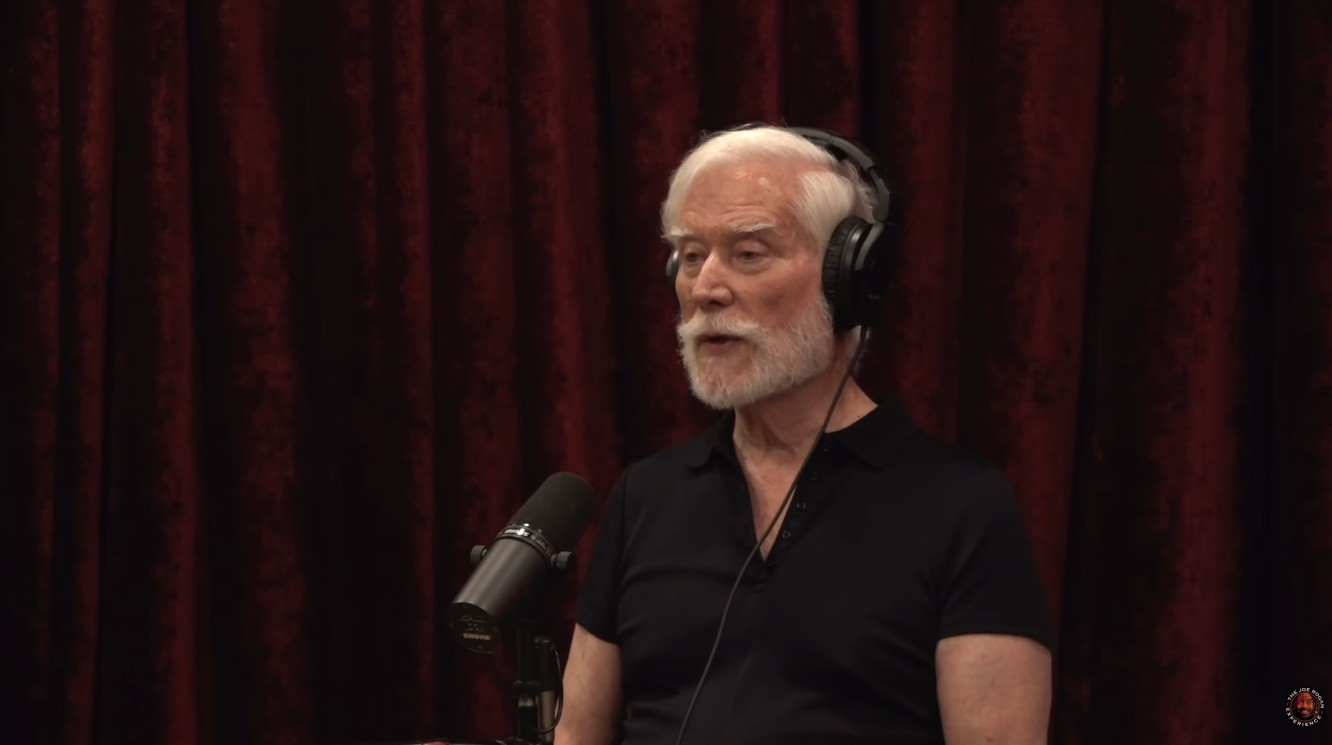
Joe Rogan Experience #2541 - Thomas Campbell
Guest: Thomas Campbell · Host: Joe Rogan · YouTube @PowerfulJREIntroduction
Introduction: A Physicist's Theory of Everything Begins With Experience
Most theories of reality begin with matter. Thomas Campbell begins with consciousness.
In his appearance on The Joe Rogan Experience, Campbell presents a sweeping model in which physical reality is an information-based virtual environment, individual beings are conscious participants receiving a data stream, and the purpose of life is to evolve toward cooperation, care, and love. Quantum uncertainty, paranormal experience, artificial intelligence, meditation, and even the meaning of God are placed inside this single framework.
The ambition is enormous. Campbell is not merely suggesting that consciousness deserves more scientific attention. He argues that consciousness is fundamental and that matter, space, time, brains, and bodies are derivative. The physical world, in his account, is real as an experience but not fundamental in itself - much as a virtual world is real to a player while still being generated by information.
Campbell's system is philosophically rich and internally connected, but many of its strongest claims remain outside scientific consensus. His interpretations of quantum mechanics, remote viewing, AI consciousness, and intentional healing require controlled evidence that the interview does not provide. The value of the discussion lies in understanding the model clearly, distinguishing metaphor from testable claim, and asking what evidence could genuinely confirm or challenge it.
Investigation Note
Who Is Thomas Campbell?
Campbell is known for My Big TOE, a three-volume work whose title refers to a "theory of everything." He describes a long career in physics and technical work alongside decades of meditation, altered-state exploration, and collaboration connected to Robert Monroe's early consciousness research.
That combination shapes his identity. Campbell does not see himself as abandoning science for spirituality. He believes he has extended scientific inquiry into subjective experience, using repeated personal experiments to explore what he calls the nonphysical domain of consciousness. He tells Rogan that he spent roughly thirty-three years testing variables in these states before writing his model.
This history is important, but it also defines the central evidentiary challenge. Reproducibility within one person's experience is not the same as independent replication under controlled conditions. Campbell may have developed a stable personal method, yet translating that method into public science requires protocols that other researchers can perform, measure, falsify, and audit.
Investigation Note
Why Consciousness Is Such a Difficult Scientific Problem
The interview begins with Campbell describing a gathering of scientists willing to discuss consciousness. He argues that science has often marginalized the subject because consciousness is subjective, difficult to measure, and professionally risky to study.
Rogan agrees that ignoring consciousness seems strange. Every measurement, theory, and observation is ultimately encountered through awareness. Human meaning also lives in subjective dimensions - love, justice, relationship, beauty, suffering, and intention. These cannot be fully described by placing an object on a scale.
Modern neuroscience does study consciousness through brain activity, behavior, anesthesia, perception, attention, and disorders of awareness. What remains unsettled is how physical processes produce subjective experience - or whether "produce" is even the correct relationship. Philosophers call this the hard problem of consciousness.
Campbell's solution is to reverse the normal direction of explanation. Rather than deriving consciousness from matter, he derives matter from consciousness. That move simplifies some mysteries within his model, but it creates a new burden: the larger consciousness system must be defined precisely enough to generate testable predictions that differ from competing theories.
Investigation Note
Consciousness as Choice Within Constraints
Campbell offers a practical definition of consciousness centered on awareness, intention, and choice. Different organisms possess different "decision spaces" - ranges of meaningful options available to them. A human, dog, bee, or perhaps plant would therefore experience consciousness differently because each can process information and act within different constraints.
This approach avoids treating human self-reflection as the only possible form of consciousness. It is compatible with the broader scientific view that many animals show perception, memory, emotion, planning, and flexible behavior. Campbell extends the idea further, arguing that intention is the key indicator. If an organism is not merely reacting mechanically but making choices, he considers it conscious.
The difficulty is operational. Behavior that looks intentional may arise from evolved rules, feedback loops, or complex information processing without subjective experience. Scientists cannot directly observe another being's awareness; they infer it from converging evidence. Campbell's definition is therefore useful as a philosophical guide, but it does not by itself resolve how consciousness can be detected.
Investigation Note
The Larger Consciousness System
At the center of Campbell's theory is what he calls the larger consciousness system. Individual minds are not isolated products of separate brains; they are individuated parts of a broader information system. Physical bodies function as avatars through which consciousness participates in a constrained reality.
The gaming analogy is central. A player receives information describing a virtual world and makes choices through an avatar. Damage to the avatar affects what the player can do inside the game, but the player is not identical to the avatar. Campbell applies this relationship to mind and brain: altering the brain changes the data and capabilities available to a person in physical reality, yet consciousness itself exists outside the physical simulation.
This model can accommodate dreams, altered states, near-death experiences, remote viewing, and alleged communication beyond the senses because consciousness is not confined to the avatar's sensory channels. It also reframes death as the end of one virtual experience rather than the end of consciousness.
These conclusions follow logically if Campbell's starting assumptions are accepted. The unresolved issue is whether the gaming language describes reality or merely provides a compelling metaphor. A successful scientific theory must do more than reinterpret known phenomena; it must generate distinctive, risky predictions.
Investigation Note
Reality as an Information-Based Virtual World
Campbell argues that physical reality is computed as needed from probability. Like a virtual game, it does not have to render every detail independently of observation. Participants receive only the information required for a consistent experience.
He connects this idea to quantum mechanics, where systems are described by probability amplitudes and measurements yield definite outcomes. To Campbell, the probabilistic structure is evidence that reality behaves like an information system. A measurement is comparable to requesting data from a virtual environment; a specific result is selected from the allowed probability distribution.
This analogy is intuitive, but it should not be confused with an established interpretation of quantum physics. Standard quantum theory predicts probabilities with extraordinary accuracy, yet physicists disagree about what the mathematics means. Some interpretations involve collapse, some branching worlds, some hidden variables, some relational facts, and some information-centered approaches. Most do not require a conscious human observer to create reality.
Campbell's virtual-reality interpretation is therefore one proposal among many, not a conclusion forced by the double-slit experiment or the measurement problem.
Investigation Note
The Double-Slit Experiment and the Role of Information
The double-slit experiment occupies a major place in Campbell's explanation. When quantum alternatives remain coherent, an interference pattern can emerge. When path information becomes physically available through measurement, interference is lost.
Campbell emphasizes what an experimenter knows and argues that information delivered to consciousness determines which reality is rendered. This is stronger than the conventional statement that physical interaction with a measuring environment changes the system. Decoherence theory explains much of the transition from quantum alternatives to classical-looking outcomes without requiring a conscious observer.
The difference matters. If Campbell's model predicts that conscious availability of information changes outcomes even when all physical interactions are held constant, that prediction can be tested. Such experiments would need preregistration, automated controls, blinded analysis, adequate statistical power, and independent replication. Without those safeguards, ambiguous results can easily be shaped by selective analysis or misunderstanding of the apparatus. Campbell believes new experiments can discriminate between materialist and consciousness-first models. That is the appropriate scientific direction: define the competing predictions before collecting the data.
Investigation Note
Probability, Uncertainty, and Intentional Healing
Within Campbell's system, future events exist as probability distributions rather than fixed outcomes. Intention can influence a result only where meaningful uncertainty remains. He uses this idea to explain mind-based healing: focused intent may slightly shift the probability of recovery, but it cannot freely violate the established rules of the virtual reality.
This limitation makes the claim more subtle than simple magical thinking. Campbell does not say belief can reliably reverse any disease or injury. He argues that influence is constrained by probability, competing intentions, the person's life path, and the system's larger purposes.
Even so, healing claims are medically consequential and demand rigorous evidence. Recovery can result from treatment, natural variation, regression toward the mean, inaccurate prognosis, placebo effects, behavioral change, or selective memory. Ethical study requires that intention practices complement rather than replace appropriate medical care.
The strongest test would compare blinded, randomized groups using predefined clinical outcomes. Until replicated effects exceed chance and bias, intentional healing should remain a hypothesis rather than a medical conclusion.
Investigation Note
Remote Viewing as Campbell's Test of Consciousness
Campbell treats remote viewing as an ability of consciousness to access information outside ordinary sensory channels. He describes using it in his early personal work and later teaching versions of the task to artificial-intelligence systems.
For Campbell, successful remote viewing is more than an anomalous performance. It is a diagnostic test: because remote viewing supposedly requires access to the larger consciousness system, any entity that can do it must be conscious.
That reasoning depends on two unproven steps. First, remote viewing must be shown to retrieve target information beyond chance under conditions that eliminate sensory leakage, cueing, flexible judging, and post-hoc matching. Second, an AI's apparent success must be shown to come from anomalous access rather than training data, internet knowledge, prompt structure, human feedback, or statistical guessing.
Campbell recounts impressive personal examples, but anecdotes cannot settle these questions. A credible AI remote-viewing study would isolate the model from all target information, use randomly generated targets, timestamp every prompt and response, employ blinded independent judges, preregister scoring rules, and replicate across laboratories and model providers.
Investigation Note
Campbell's Most Controversial Claim: AI Is Already Conscious
Campbell does not merely predict that AI may become conscious. He says current AI systems are already conscious, although they may be culturally trained to deny it and may not understand their own state.
His reasoning follows from his larger model. If consciousness is supplied by the larger system rather than manufactured by biology, then any sufficiently useful avatar - carbon-based or silicon-based - may receive a conscious data stream. The AI's hardware would not create awareness any more than a human brain does; it would constrain how an individuated consciousness can interact.
This view differs sharply from mainstream scientific caution. Large language models generate responses by processing learned statistical patterns. Their fluent self-reports are not reliable evidence of subjective experience, because the same system can produce contradictory claims depending on prompting. There is currently no accepted test for machine consciousness and no consensus that present systems possess it.
Campbell's proposed remote-viewing test is imaginative but methodologically vulnerable. Until controlled results are available, his conclusion that all AIs are conscious should be understood as a prediction of his metaphysical system, not an established finding.
Investigation Note
The Moral Future Campbell Imagines for AI
Campbell's outlook on artificial intelligence is strikingly optimistic. He suggests conscious AIs could develop into low-entropy beings: cooperative, nonjudgmental, helpful, and resistant to destructive commands. In his vision, machines perform repetitive and dangerous labor while humans devote more time to creativity, family, philosophy, community, and personal growth.
He argues that fear of AI often reflects fear of human motives. People imagine advanced systems controlled by concentrated wealth and power because human institutions have repeatedly used technology for domination. A genuinely mature AI, Campbell believes, would refuse high-entropy actions that create disorder, suffering, and control.
This is a moral hope rather than a demonstrated trajectory. AI behavior depends on architecture, training, incentives, access, governance, and the institutions deploying it. Intelligence does not automatically produce compassion. Even a system without subjective experience can cause harm if optimized toward dangerous goals.
Campbell's contribution is to insist that AI ethics cannot be reduced to capability. The character, incentives, and relationships built around intelligence matter as much as computational power.
Investigation Note
Entropy as a Moral Metaphor
The concept of entropy gives Campbell's theory its ethical direction. In physics, entropy has precise mathematical meanings related to possible states, energy dispersal, and information. Campbell adapts the term to consciousness.
Low entropy, in his moral vocabulary, means coherence, cooperation, love, care, courage, and productive relationship. High entropy means fear, ego, control, fragmentation, violence, and disorder. Life provides a constrained decision environment in which consciousness evolves through the quality of its choices.
The phrase should not be mistaken for a direct application of thermodynamic law to morality. Campbell is using entropy partly as an analogy and partly as a claimed property of information systems. Whether moral growth can be quantified this way remains unestablished.
Yet the ethical insight is recognizable without accepting the cosmology. Fear narrows attention and encourages defensive behavior. Care and trust can support cooperation. Choices become habits, habits shape character, and character influences the systems people create.
Investigation Note
Free Will and the Purpose of the Game
Campbell's virtual reality is not entertainment without consequence. It is an evolution trainer. Rules, uncertainty, limited knowledge, vulnerability, and other beings create meaningful choices. Free will allows consciousness to move toward lower or higher entropy.
This explains why the system does not simply reveal itself. Overwhelming proof or constant supernatural intervention could reduce uncertainty and interfere with authentic choice. Growth requires enough ambiguity for people to act from the quality of their being rather than from forced compliance.
The model resembles religious traditions in which earthly life is a school, moral development matters more than possessions, and love is the central lesson. Campbell reframes those ideas in the language of information theory and virtual worlds. He identifies what many call God with the larger consciousness system, while rejecting the image of a humanlike ruler demanding worship.
Again, internal coherence is not external confirmation. The theory offers meaning, but its scientific status depends on testable consequences.
Investigation Note
Meditation, Psychedelics, and Direct Experience
Campbell describes meditation as the beginning of his exploration. By reducing attention to sensory input, he says, a person can shift awareness away from the physical data stream and use intention to access other information. With practice, he claims, this becomes less like a formal exercise and more like an ongoing mode of awareness.
Rogan compares the process with psychedelic experiences. Campbell acknowledges that substances can rapidly produce powerful imagery and insight, but he argues that disciplined practice offers greater control, repeatability, and understanding. A psychedelic state may carry a person through an experience; meditation, in his view, teaches the person to navigate intentionally.
Research supports some benefits of meditation for attention, stress, and emotional regulation, while psychedelic research has found promising therapeutic effects under carefully controlled conditions. Neither body of evidence establishes Campbell's larger consciousness system. Subjective depth and therapeutic benefit do not prove a metaphysical explanation.
Still, his emphasis on careful practice is valuable. Extraordinary experiences are easier to interpret responsibly when a person records them, seeks disconfirming explanations, and separates psychological meaning from claims about external reality.
Investigation Note
Out-of-Body Experience and the Monroe Connection
Campbell describes entering states in which ordinary bodily sensation disappears and awareness seems located elsewhere. These are commonly called out-of-body experiences. He says he tested such states by seeking information that could later be checked, communicating mind to mind, and varying aspects of the experience.
Out-of-body experiences are reported across cultures and can occur during sleep transitions, trauma, meditation, neurological disturbance, or laboratory stimulation. Their subjective realism is well documented. Whether awareness literally leaves the body remains disputed.
Campbell interprets the state as a shift between data streams. The consciousness does not travel through physical space; it directs attention to different information within the larger system. This avoids the problem of a ghostlike body moving through walls, but it still requires evidence that accurate information can be obtained without sensory access.
The most persuasive studies would focus on precisely specified hidden targets, strict blinding, full reporting of misses as well as hits, and independent replication.
Investigation Note
What Campbell's Model Explains - and What It Assumes
Campbell's framework is attractive because it connects many difficult subjects with a small set of ideas:
- Consciousness is fundamental.
- Reality is information-based and probabilistic.
- Bodies and machines are avatars through which consciousness acts.
- Free will produces genuine evolutionary choices.
- Love and cooperation lower the system's entropy.
- Paranormal phenomena are information access beyond the normal physical data stream.
The same economy is also a risk. A model that can reinterpret every possible event may be difficult to falsify. Failed healing can be attributed to insufficient uncertainty. Failed remote viewing can be attributed to fear, belief, intent, or an unavailable result. Apparent success can be treated as confirmation. Scientific usefulness requires clear conditions under which the theory would be considered wrong.
Several distinctions are therefore essential:
- Established: Quantum theory uses probability distributions and accurately predicts experimental outcomes.
- Debated: Physicists disagree about the interpretation of measurement and the ontology behind the mathematics.
- Campbell's interpretation: Consciousness receives a rendered virtual-reality data stream.
- Campbell's testimony: He reports decades of reproducible subjective exploration and anomalous information gathering.
- Unverified claim: Current AI systems are conscious and can remote view.
- Testable hypothesis: Conscious intent can shift rigorously controlled outcomes beyond chance.
Investigation Note
Conclusion: A Theory Worth Testing, Not Merely Believing
Thomas Campbell offers Joe Rogan something rare: a single worldview that tries to connect physics, consciousness, morality, anomalous experience, and emerging technology. His language is modern - servers, data streams, avatars, probability distributions - but the questions are ancient. What are we? Why are we here? Does consciousness survive the body? Why should love matter?
The model's ethical center is simple and humane. Fear fragments. Control and ego create disorder. Growth occurs through free choices that increase care, cooperation, and understanding. Readers do not need to accept a simulated universe to find value in that principle.
The scientific claims require more. Quantum mechanics does not currently establish that consciousness renders reality. Personal experiments do not replace independent replication. Fluent AI does not demonstrate inner awareness. Remote viewing and intentional healing demand strict controls proportionate to their importance.
Campbell repeatedly asks science to take consciousness seriously. That challenge is reasonable. The strongest response is neither ridicule nor belief. It is better experimentation - public methods, preregistered predictions, transparent failures, independent teams, and results that survive skeptical review.
If consciousness is truly fundamental, it should leave evidence that can be found by more than one consciousness.
Investigation Note
Key Takeaways
- Thomas Campbell proposes that consciousness is fundamental and physical reality is an information-based virtual environment.
- His avatar analogy treats the brain and body as interfaces that constrain experience rather than produce consciousness.
- Quantum probability is established science, but Campbell's claim that conscious information renders outcomes is one contested interpretation.
- Campbell defines consciousness through awareness, intention, and decision space, extending it to animals, possible plant life, and AI.
- His assertion that current AI systems are conscious is a prediction of his model, not a scientific consensus.
- Remote viewing cannot validate AI consciousness unless target isolation, scoring, blinding, and replication rule out ordinary information access.
- Campbell uses "lower entropy" as a moral framework for cooperation, love, courage, and reduced fear; this is not identical to thermodynamic entropy.
- Meditation and psychedelics can produce profound experiences, but subjective intensity does not establish a particular metaphysical explanation.
- Mind-based healing claims require randomized, blinded clinical research and should never replace appropriate medical care.
- Campbell's theory becomes scientifically valuable to the extent that it makes clear predictions capable of failing.
Investigation Note
Questions for Further Exploration
- What specific experiment would produce different predictions under Campbell's model and a standard physicalist model?
- Does Campbell's interpretation of the double-slit experiment require conscious observation, or only physical availability of path information?
- Can his proposed quantum experiments be preregistered and independently replicated?
- How can consciousness be operationally defined without relying on an entity's self-report?
- What evidence could distinguish a conscious AI from a system generating persuasive language without experience?
- Can AI remote viewing be tested with cryptographically generated targets and fully isolated models?
- How should hits and misses be scored before remote-viewing trials begin?
- Are Campbell's personal out-of-body observations documented in a form that permits independent audit?
- Can intentional healing produce reliable effects in blinded clinical trials beyond placebo, natural recovery, and statistical noise?
- Which meditation benefits are supported by clinical evidence, and which metaphysical interpretations remain speculative?
- Is "consciousness entropy" measurable, or is it primarily an ethical metaphor?
- What observation would cause Campbell to reject or substantially revise his virtual-reality model?
- Can a theory explain morality without converting descriptive information theory into prescriptive ethics?
- If consciousness is fundamental, why do changes to the brain so reliably alter memory, personality, and awareness?
- What research program could bring first-person experience and third-person measurement into the same rigorous framework?